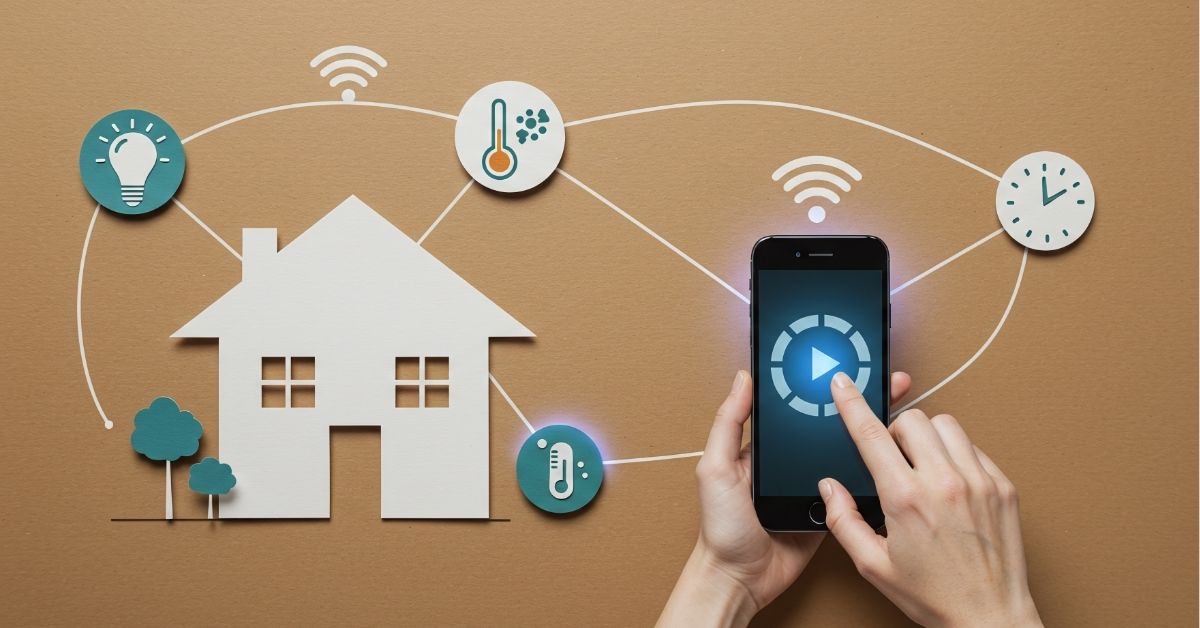
The modern smart home movement has convinced many of us that everything in our homes needs to connect to the internet. Thermostats, doorbells, light bulbs, refrigerators — if it exists, someone’s probably made a Wi-Fi-enabled version of it.
So when you start looking at garage door monitors, you might assume Wi-Fi connectivity is essential. After all, how else would the system communicate? How else would you check your door status from anywhere?
Here’s the truth that might surprise you: not only do you not need Wi-Fi for effective garage door monitoring, you’re often better off without it.
The Wi-Fi Promise vs. Reality
Wi-Fi-enabled garage door systems promise: check your garage door status from anywhere, close the door remotely, and receive instant notifications. Sounds perfect in theory. In practice, there are challenges.
Weak Garage Wi-Fi Signal
Most homes have routers positioned for optimal coverage of living spaces. Garages, especially detached or far from the router, often get weak or spotty signals. Your system might connect intermittently, give false alerts, or fail when you actually need it.
Internet Outages
Service interruptions happen due to weather, maintenance, or billing issues. A Wi-Fi-dependent garage monitor is useless during an outage — yet home security problems don’t wait for your internet to return.
Router Problems
Routers occasionally need restarting, firmware updates can disrupt connections, and multiple devices can overwhelm your network. A single network hiccup can disable a Wi-Fi garage monitor entirely.
The Smartphone Dependency Problem
Most Wi-Fi garage monitors require a smartphone app to function, which creates its own set of issues.
Phone Availability
Your phone battery might die, you might leave it in another room, or it might be updating. In all cases, a smartphone-dependent system fails when you need it.
App Complexity
To check your door, you must unlock your phone, open the app, wait for a connection, navigate to the correct screen, and interpret the information. That’s five steps for a yes-or-no question.
Updates and Compatibility
Apps require updates, which can introduce bugs or stop supporting older devices. Your security shouldn’t depend on software schedules.
The Hidden Costs of Wi-Fi Systems
Subscription Fees
Many systems charge monthly or annual fees for full functionality. Over time, subscriptions can cost more than the hardware itself.
Energy Consumption
Devices that maintain constant Wi-Fi connections drain batteries faster or increase electric bills if plugged in.
Technical Support Needs
Wi-Fi systems can fail, requiring troubleshooting or replacement. Complexity creates more points of failure.
What You Actually Need
The goal is simple: know whether your garage door is open or closed. That’s it. You don’t need global access, remote control, or integration with multiple smart devices.
Most homeowners only need confirmation in two situations: leaving home and going to bed. In both cases, you’re physically at home — no need for remote internet access.
How Non-Wi-Fi Monitoring Works
Direct Wireless Communication
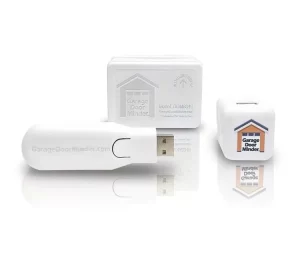
Sensors communicate directly with a receiver in your home. Like a baby monitor, the system creates its own private connection without relying on external networks.
Visual and Audio Alerts
Receivers provide instant awareness via LED lights or sounds. You don’t check an app — the system notifies you proactively.
Battery Operation
Without constant Wi-Fi, these monitors run longer on standard batteries, sometimes a year or more. No outlets or wiring needed.
The Reliability Advantage
Wi-Fi systems rely on multiple components: sensor batteries, Wi-Fi signal, router, internet, servers, phone, and app updates — eight potential points of failure.
Non-Wi-Fi systems only require: charged sensor batteries, powered receiver, and a direct wireless signal — just three points of potential failure. Fewer dependencies mean higher reliability.
When Wi-Fi Makes Sense
Wi-Fi adds value if you travel frequently, want to monitor a vacation home remotely, or need to close the garage door from anywhere.
For most homeowners, these scenarios are rare. Everyday needs — reliable awareness while at home — don’t require Wi-Fi.
Making the Right Choice
Ask yourself:
- Do you really need to check your garage door status remotely?
- Or do you just need confirmation when leaving home and before bed?
- Are you comfortable troubleshooting Wi-Fi and app issues?
- Is remote control worth the cost and complexity, or would simple, dependable monitoring suffice?
For most people, the answers point to non-Wi-Fi solutions: simple, reliable, and free from unnecessary complications.
The Peace of Mind You Deserve
Your home security shouldn’t depend on your internet provider, your phone’s battery, or app updates. It shouldn’t require monthly subscriptions.
Effective garage door monitoring can be straightforward and dependable without Wi-Fi. You don’t need cutting-edge technology to solve a basic problem — you need appropriate technology that works consistently. Many homeowners seek reliable solutions that do not depend on an internet connection, as Wi-Fi can be unpredictable and unavailable in some situations. By using battery-operated sensors and alarms, you can effectively monitor garage doors without internet and receive alerts whenever the door opens or closes. This approach ensures peace of mind and security without the complications of modern connectivity.
Sometimes the smartest choice is the simplest one. Your peace of mind deserves a system that serves you reliably, not one you have to manage.